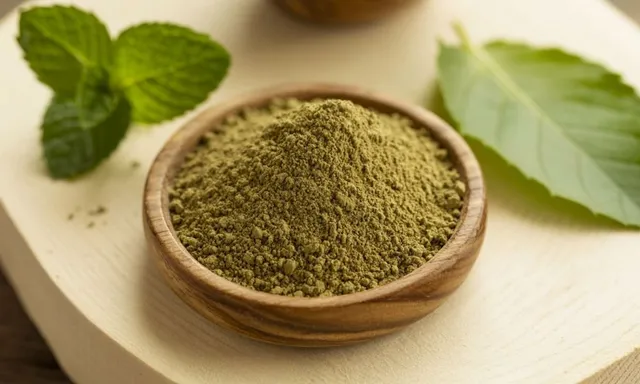

Top 7 reasons to switch to herbal tooth powder
Seven practical benefits of moving to a natural, chemical-free tooth powder, rooted in Ayurvedic tradition.
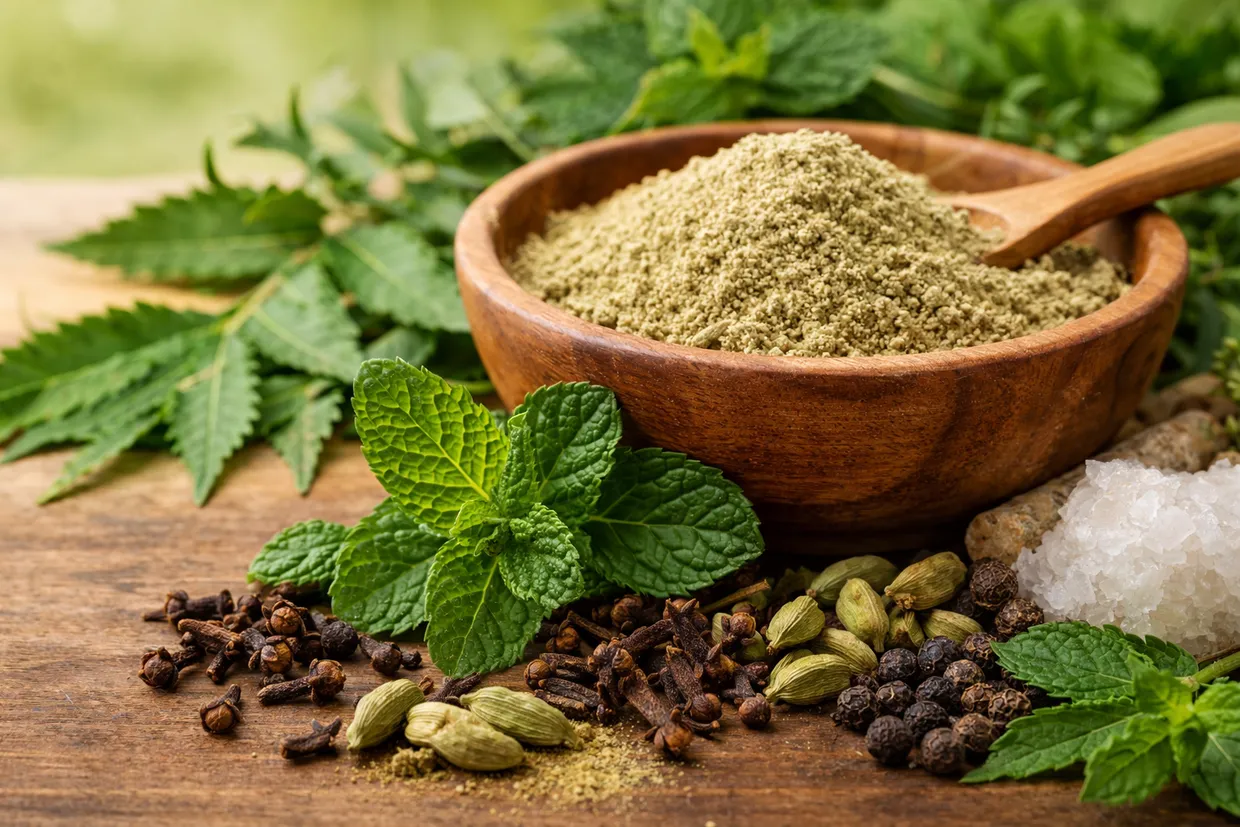
Good oral hygiene is essential for overall health. Healthy teeth and gums give you a confident smile and play an important role in digestion, speech and general wellbeing. While modern toothpaste is widely used today, many people are exploring natural alternatives that don’t rely heavily on synthetic chemicals.
One traditional solution gaining popularity again is herbal tooth powder. Rooted in Ayurvedic practice, herbal tooth powders are made from natural ingredients such as neem, clove, mint and other traditional herbs, used for generations to clean teeth, care for gums and keep breath fresh.
Here are seven reasons it can be a great addition to your daily routine.
1. Made with natural ingredients
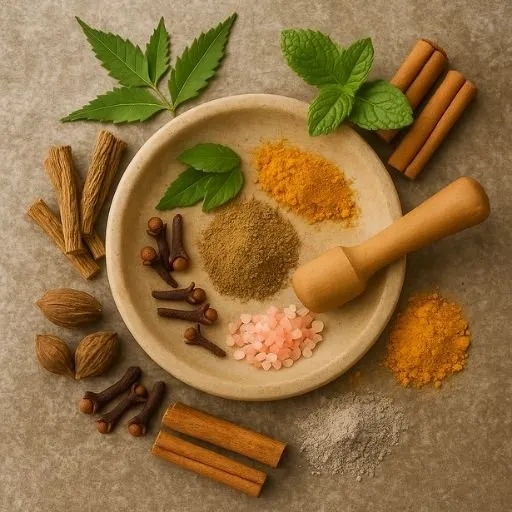
Herbal tooth powder is prepared from natural, plant-based ingredients. Unlike many commercial toothpastes that contain artificial additives, herbal powders rely on traditional herbs:
- Neem: India’s “village pharmacy” tree, long used for oral care
- Clove: traditionally valued for comfort and freshness
- Mint: natural freshness
- Black pepper: a classic in traditional tooth powders
These ingredients clean teeth effectively while keeping the mouth’s environment balanced.
2. Supports healthy gums naturally
Healthy gums are essential for strong teeth. Gum problems such as swelling and bleeding often start with bacterial build-up and poor oral hygiene. Herbal tooth powder supports gum care by keeping the gum line clean, and when used with a gentle massage, it can improve circulation in the gums.
Want a full routine? Read how to maintain healthy gums naturally.
3. Helps control bad breath
Bad breath is usually caused by bacteria, food particles or gum problems. Mouthwashes often mask it only briefly. Herbs like mint and clove help keep the mouth clean, so freshness lasts longer with consistent use.
4. Free from harsh chemicals
Many people now prefer personal care products without harsh chemicals. Some commercial toothpastes contain artificial foaming agents, preservatives and synthetic flavours. Herbal tooth powders are generally milder and more natural.
To understand the difference in detail, read herbal tooth powder vs chemical toothpaste.
5. Supports better oral hygiene
Regular use of herbal tooth powder helps remove plaque and food particles. The benefits include natural cleaning, less plaque build-up, support for gum health and fresher breath, without relying on harsh whitening abrasives.
6. Inspired by traditional Ayurvedic oral care
Herbal tooth powder has been used for centuries in India. Ayurvedic oral care focused on cleaning teeth with herbal powders, caring for gums with traditional herbs and maintaining natural balance in the mouth.
Many modern natural products are inspired by these practices. ToothVedha, made by LMTIMS, combines traditional Ayurvedic ingredients with modern manufacturing standards.
7. Easy to use every day
Adding herbal tooth powder to your routine is simple:
- 01Wet your brushUse a soft-bristled toothbrush and wet it thoroughly.
- 02Dip in powderDip the bristles into the jar to pick up about half a gram.
- 03Brush gentlyBrush for 2–3 minutes, starting with the inner surfaces.
- 04Rinse wellRinse thoroughly with water for a fresh, clean finish.
Is it suitable for everyday use? Read our guide: is Ayurvedic tooth powder safe for daily use?
Tips for choosing the right herbal tooth powder
- Check that it contains natural herbal ingredients
- Avoid products with artificial additives
- Choose trusted brands that list every ingredient
- Look for a fine, smooth texture that’s gentle on enamel
Conclusion
Switching to herbal tooth powder can be a healthy step toward stronger teeth and gums. With its blend of traditional Ayurvedic herbs, it offers a gentle yet effective alternative to chemical-based products.
Combined with a consistent routine, natural dental care can help you keep healthy gums and a confident smile for years to come.
This article is for general information and isn’t a substitute for professional dental or medical advice. If you have persistent symptoms, please see a dentist.